I was an Art Festival Roadie…
What I learned about what people liked and purchased - and Why
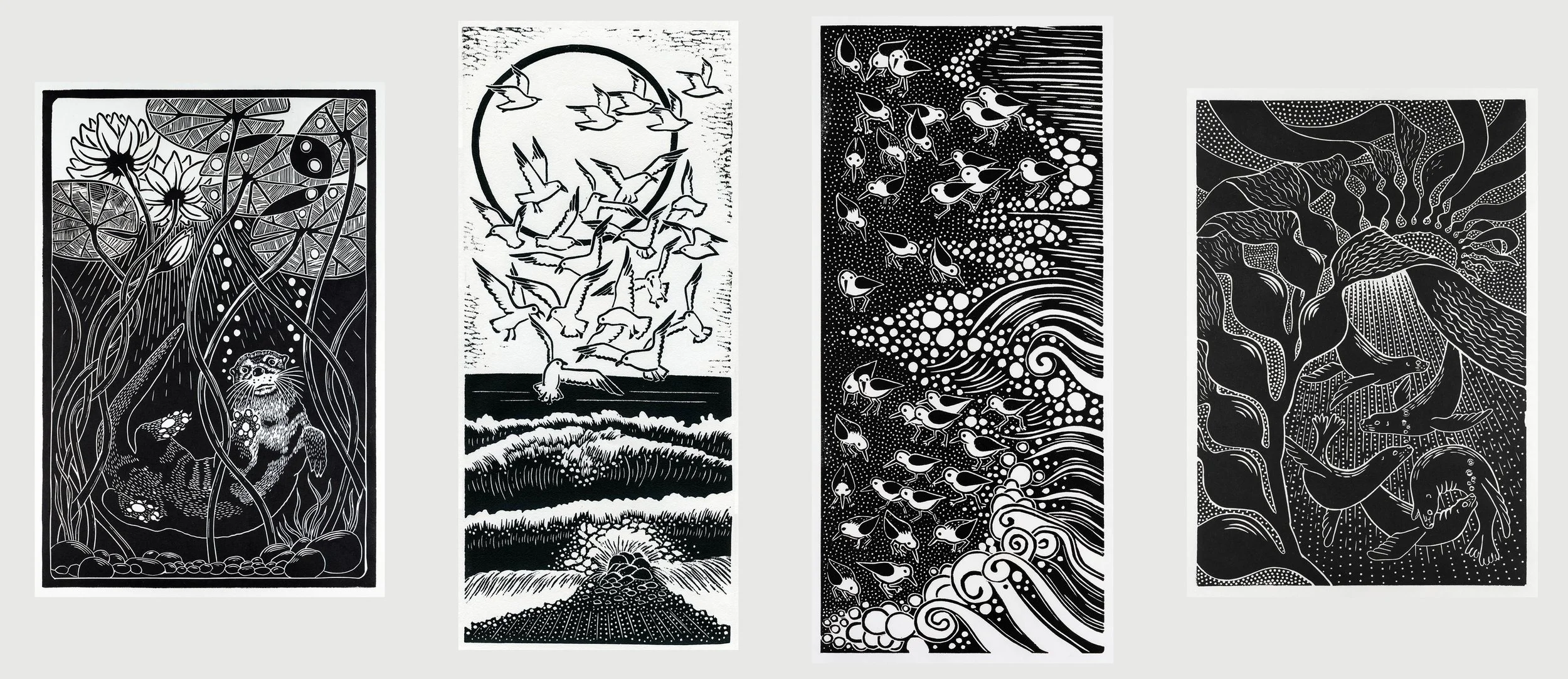
My incredible wife, Dona Reed, has been a practicing (or working) artist all of her adult life. She became a full-time artist about 30 years ago in a variety of media, but primarily as a block printer. Her work can be seen at www.donareedartist.com. During that time, she exhibited her work in various art festivals and shows, mostly in the Pacific Northwest, a handful of galleries and even owned a gallery in Friday Harbor, WA.
I served as her roadie at the festivals and shows. Between setup and breakdown, there wasn't much for me to do other than give her periodic breaks and make sure the credit card machine always worked. I had plenty of time on my hands. Of course, I went photographing and exploring in the local area. But I was I was curious about what art people liked and purchased and why. So, I also spent a lot of time in her booth (in the back) and roaming the show just listening to the artists and show attendees, which proved to be extremely interesting. Mostly I heard snippets of conversations, sometimes a longer sampling and sometimes engaged in conversation with both artists and patrons. I learned a lot about why people like particular pieces of art and, perhaps more importantly, about what and why they buy. Here's what I learned.
First, most people that go to an art festival (or galleries and exhibitions) don't buy anything but enjoy looking at the art and getting out of the house. Second, the big driver of art buying is change - new home, new relationship, new decor, new job, new income level, etc. as well as, "I don't know where I'm going to put it, but I just had to have it". And third, most people said that they bought a piece because "they liked it". But why? Digging a little deeper, they "liked" and perhaps bought artwork for one of three reasons (or some combination of the three), from least to most important: one, the visual appeal of the piece, two, the match to their décor and the available display space and, three, the personal story that connected them to the piece and/or the artist.
Visual appeal is really about taste, and, as we know, there is no accounting for taste. There are as many "tastes" as there are people, so I never really got too much depth on this one. For whatever reason, the piece "grabbed them", or "spoke to them" or evoked a feeling or memory. I was a bit surprised that visual appeal seemed less important than the other two. But if the piece didn't "grab them", they never considered the second and third factors. If it did, then those factors would determine if and what they bought.
Once past visual appeal, fitting décor and space was talked about a lot more. The artwork's color palette (or lack thereof in my wife's case, being a black and white print maker) had to match that of their décor (including other artwork), and had to fit into their available visual space. As an aside, people seemed to need help in thinking about what would fit into their space. Over time, we learned that most people seemed to have a bare narrow, vertical space, say between a doorway or window and a room's corner. So Dona made more vertical work that would fit into that kind of space. I also realized that people would reject a smaller piece that they seemed to like because it would get lost in their bigger space. But they might buy several pieces to fill up that space if prompted.
Number three, the story that connected the patron to the work and/or the artist, seemed to be most frequent and powerful reason for buying. That story could come from the artist, the patron or both. If from the artist, it was their story about why they made the piece, what inspired it, how they came up with the idea and why they made it the way they did. How they made the piece was sometimes part of the story but not often. If from the patron, it was the story of their connection to the work based on past experience, a memory or a desire. Often that connection was more about how the work made them feel, often taking them back in time and space. They often had a memory that connected them to the subject matter or told a story about how the work reminded them of something, often emotional, from their past. Either way, the conversations between artists and patrons about these stories were often quite vivid and clearly a strong factor in patrons responses to the artwork. Dona always said she hated selling and wasn't very good at it, but she was really good at drawing out the patron's story and telling her story.
The subjects of most of the photographic art at these art shows were landscapes, architecture or wildlife. So the story was often about the patron's having been to or wanting to go to the place shown in the work, or about their connection to the particular animals depicted in the work. Or about the artist's story of their connection with the place or animal. The patrons' stories were often about how much they enjoyed a trip to the place shown in the work, how much they wanted to go to the place but perhaps couldn't, or an interaction they had with the wildlife depicted. In hindsight, the artists that were good at conversing about these stories seemed to do well. But a lot of them would mostly talk about what they had to endure to get the shot (hold my beer) or the technical aspects of work like their camera settings and lens choice. Most people didn't seem to care much about that.
There were photographic artists who I remember vividly who were different. One made beautiful still-life images reminiscent of paintings made by old masters. The story was about the connection to classic art. Another made simple black and white images of old things like typewriters, sewing machines and tools. The story was one of nostalgia and remembering how their Mom used a sewing machine like that. Another made colorful and dreamy images of simple Lego scenes. The story was one of fun and whimsey. These artists had thought a lot about the stories behind their work and would talk about with viewers and patrons about those stories. Many were also good at asking patrons questions to pull out their story about their connection to the piece.
Oh, I almost forgot - what about price? Over the years I watched photographers race to the bottom on price hoping that low prices would increase sales. Prices didn't seem to matter that much as long as they weren't outrageous. People would enter Dona's booth and often glance at the price of a few pieces to get a sense the price range of her work. But quite often, they wouldn't even look at the price of the piece they purchased until they checked out. If there was a strong connection, price didn't seem to matter for most people. And, if they like the artist's style and made a strong connection, they became collectors.