The Myth of the “Good Camera”
There's a widely shared two-part meme about photography. In the first part, after someone looked at photo, they exclaim - "Wow that's a great photo, you must have a really good camera". In the second part, the photographer responds by saying something like "Wow, this is a fantastic dinner, you must have a really good oven". Of course, the oven had little to do with the creation of that fantastic dinner, which was really the result of the cook's myriad ingredients, choices, actions and tools used in making that dinner.
I have heard the first part of this meme, or something like it, from people after they looked at my images, and heard the same from other photographers. However, I've never heard anyone say the second part. People rightly realize that a great oven, pen, or paintbrush is not what created a great meal, poem, or painting. Rather, they realize it was the artist. So why not in photography?
Photographers have been making great images for a long time with cameras that are not great. Modern cameras, even smartphones, are far superior to the equipment used by most of photography's acknowledged masters. Yet there are more bad photos made today than ever before. Even great photographers will acknowledge that they've made plenty of bad photos with the same camera that they used to make the great ones. They just never show us those bad ones. While using a great camera is better than using a mediocre one, it's not what makes great photos.
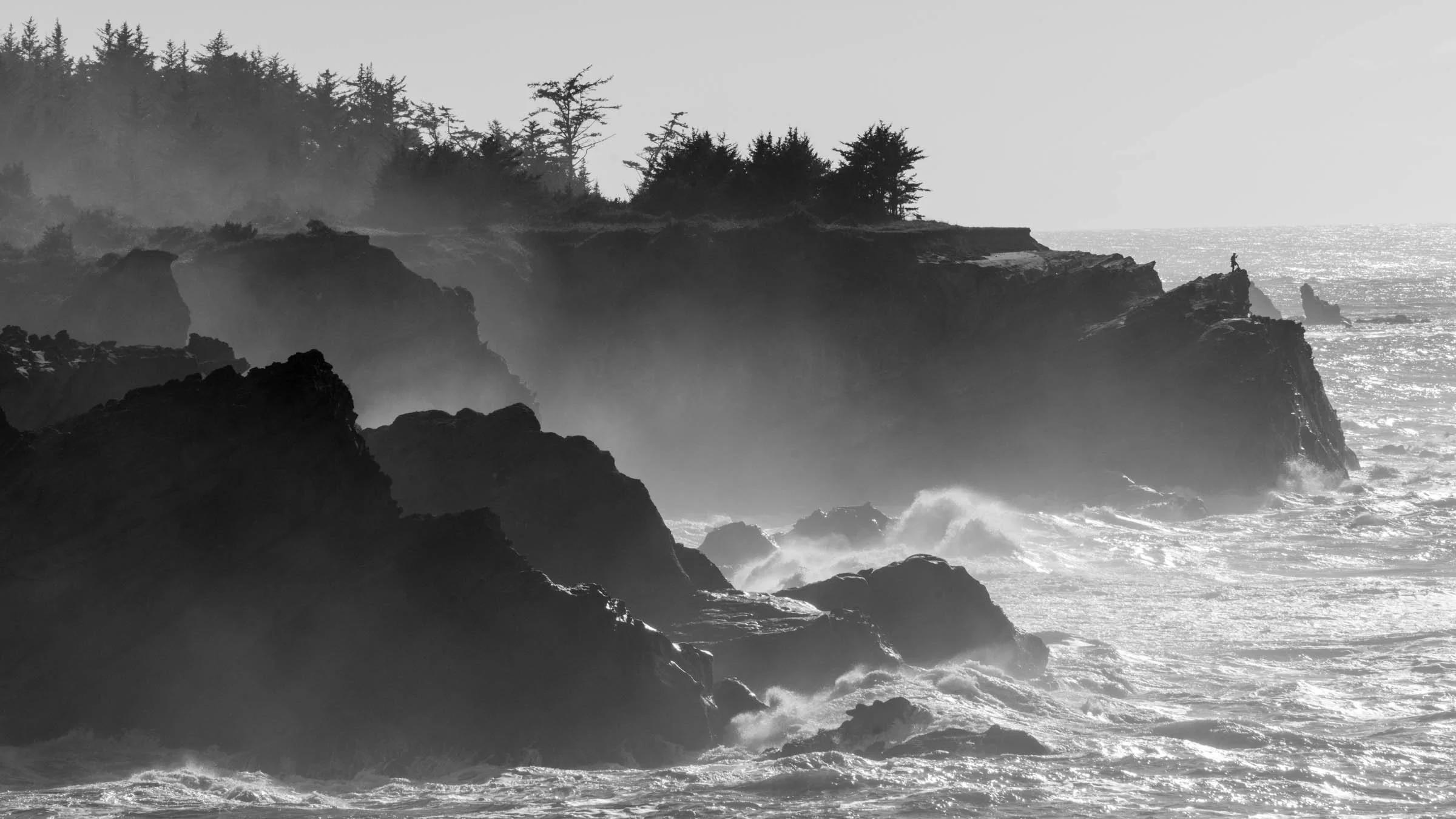
So, if it's not the camera, then what makes a great photo? Well, first there's "luck". Even the best photographers will admit this. As an example, I was photographing the coast in a storm at Shore Acres in Oregon. I had a composition that I really liked. But I kept thinking, 'this would be so much better if there was a person standing on the far cliff'. Then luck intervened. A lone figure walked onto the far cliff, stopped for less than a minute and quickly retreated. I love the resulting image, shown above. Luck can play a part, but the photographer still has to see the luck and make the photo.
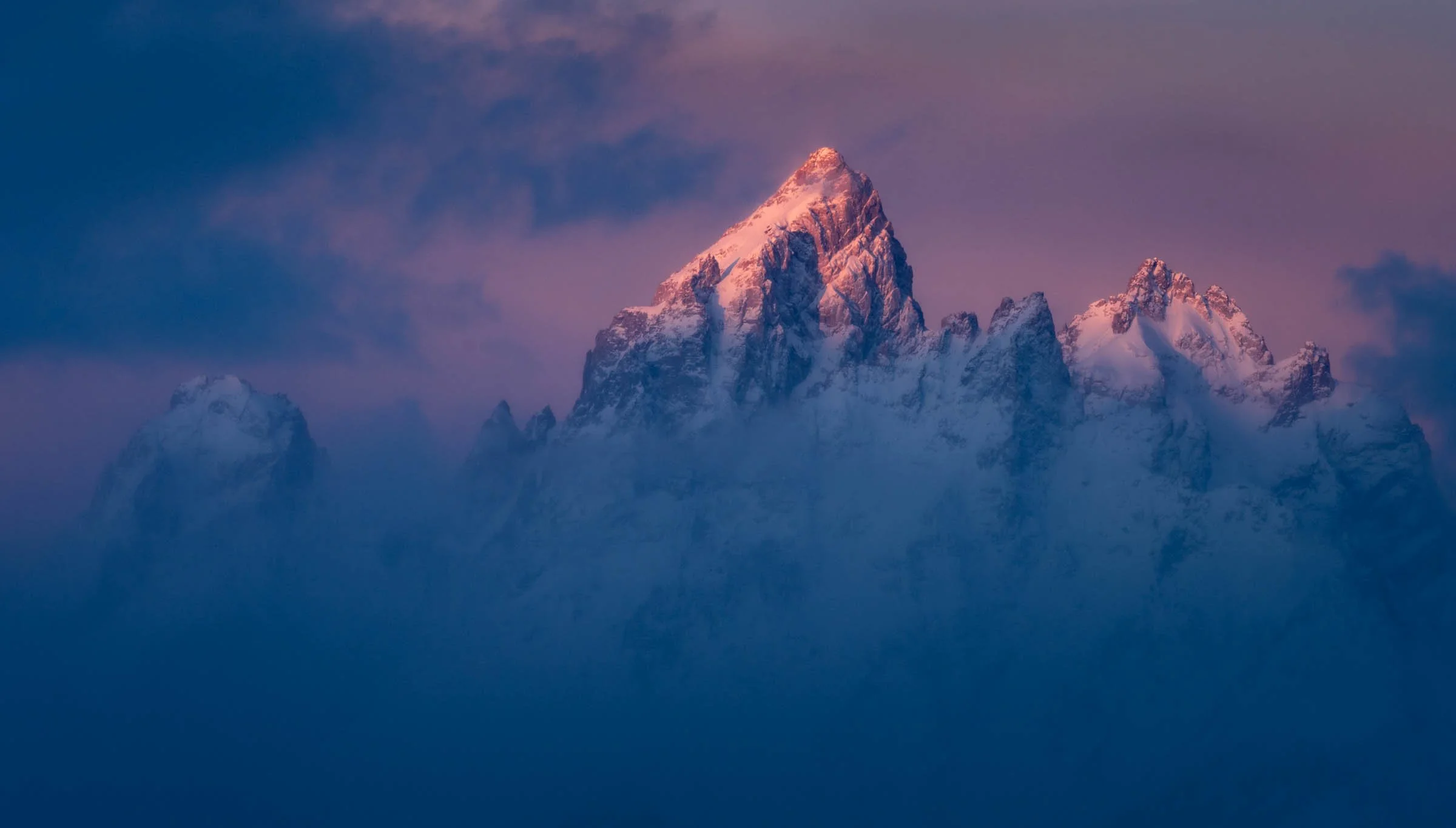
Then there's the "great subject" like the Grand Tetons in the photo below. How can a photographer not make a great photo of a great subject or scene? Well, it's easy and I've made plenty of bad photos of great subjects, as have many others. What appears to be a great subject may not make a great photo. Think of all the bad vacation photos of fantastic places that you've been subjected to. Because cameras see differently than we do, a photo of a scene that so excited the photographer can be a disappointment. So, great subjects certainly help, but to make a great photo the photographer needs to see the great photo in that scene, determine how to make that photo and then put the camera to good use.
Cameras then don't make great photos; photographers do. The camera is just a tool. As we all know, tools don't make things; the person using the tool does. Great photos, like any art, are made by the heart, head and hand of the photographer . The heart produces the photographer's emotional response to something seen. That feeling motivates and inspires the making of a photo. The head then determines what, if any, photo can be made and how to make it. And finally, while there is usually less hand work in photography than in painting or carving, the hand does play a role when working with the camera to make the "capture" and, even more importantly, in finalizing the intended image in the darkroom from that "capture", whether traditional analog or digital.
Photography is a recording medium. Almost all photos are recordings of what filled the frame of a camera's viewfinder or screen. That creates a significant constraint on making a great photo. Painters, for example, can just add paint to a blank canvas to create a picture, which of course requires a creative imagination and significant skill to do well. Photographers must work with what's in front of them. Making a great photo requires the photographer to thoughtfully arrange a composition in the viewfinder, then skillfully use light and photographic tools to turn that composition into an photo, hopefully a great one. To paraphrase Ansel Adams, a great photograph is knowing where to stand and when to stand there. That ain't as easy as most people think it is!